
If you want to feel every beat and make your car’s sound system truly come alive, hooking up a subwoofer is the way to go. But if you’re not sure where to start or worried about making mistakes, you’re in the right place.
This guide will walk you through the simple steps to connect a subwoofer to your car stereo, so you can enjoy deep, powerful bass without any hassle. Ready to upgrade your ride’s sound? Let’s dive in and get your subwoofer booming in no time.

Credit: www.coloradofans.com
Choosing The Right Subwoofer And Amplifier
Choosing the right subwoofer and amplifier is key to getting the best sound from your car stereo. The right combination ensures deep bass without distortion or damage to your equipment. Think about your car’s space, your listening habits, and the power needs before making a choice.
Matching Subwoofer Size To Car Space
Subwoofers come in various sizes, usually measured in inches like 8″, 10″, 12″, or 15″. The bigger the subwoofer, the more bass it can produce. But bigger doesn’t always mean better for your car.
Measure the space where you plan to install the subwoofer. A large subwoofer in a small car can cause sound distortion and fitment problems. On the other hand, a small subwoofer might not deliver the punch you want in a larger vehicle.
Think about your typical music choices too. If you enjoy bass-heavy genres like hip-hop or EDM, a larger subwoofer might suit you better. For casual listeners or those who prefer balanced sound, a smaller subwoofer could be perfect.
Selecting An Amplifier For Optimal Power
Your amplifier needs to match your subwoofer’s power requirements. Too little power can cause distortion, while too much power risks damaging the subwoofer. Check the RMS (continuous power) rating of your subwoofer and pick an amplifier that can deliver similar or slightly higher wattage.
Consider the amplifier’s type as well. Class D amplifiers are efficient and run cooler, making them a popular choice for car audio. Pay attention to the impedance (ohms) rating, ensuring your amplifier and subwoofer match for optimal performance.
Ask yourself: Are you planning to upgrade your system later? Choosing an amplifier with slightly more power than you currently need can save you money and hassle down the road.
Necessary Tools And Materials
Having the right tools makes the installation smoother and safer. You’ll need:
- Wire cutters and strippers
- Screwdrivers (Phillips and flathead)
- Electrical tape and wire connectors
- Power drill (optional, for mounting)
- Multimeter to check voltage and continuity
- Subwoofer wiring kit (includes power cable, ground cable, RCA cables, and fuse holder)
Before you start, disconnect your car battery to avoid any electrical shorts. Having everything ready saves you from frustrating trips to the store mid-installation.
Credit: www.diymobileaudio.com
Wiring The Subwoofer To The Stereo System
Wiring your subwoofer to your car stereo system is a crucial step to get that deep bass you crave. It’s not just about plugging in cables; it’s about making sure every connection is secure and correctly placed. Proper wiring ensures clear sound and protects your equipment from damage.
Locating The Subwoofer Output
First, find the subwoofer output on your car stereo or amplifier. This is usually labeled as “SUB OUT” or “LFE OUT.” If your stereo doesn’t have a dedicated subwoofer output, you might need to tap into the speaker-level outputs instead.
Check your stereo’s manual if you’re unsure. Sometimes the output is hidden behind panels or inside the head unit. Identifying the right port makes connecting simpler and avoids signal issues later.
Running Power And Ground Wires
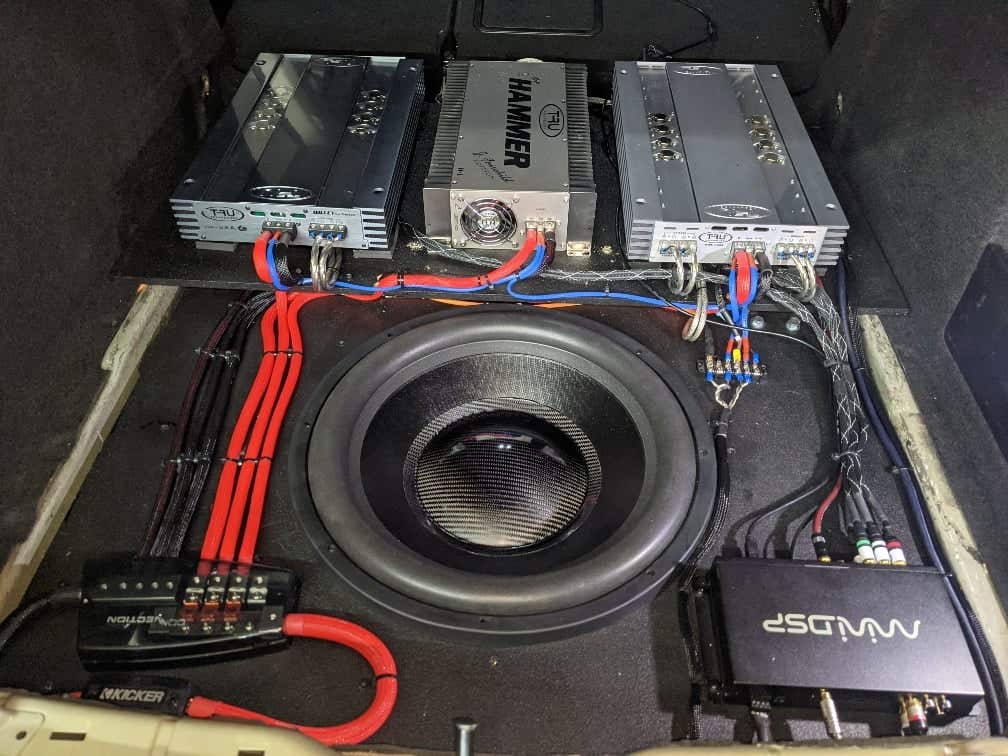
Your subwoofer needs power to operate, so running the power and ground wires properly is essential. Start by connecting a power wire from your car battery to the amplifier’s positive terminal. Use a fuse close to the battery to protect the circuit.
Next, attach a ground wire from the amplifier to a clean, unpainted metal spot on your car’s chassis. A solid ground connection prevents electrical noise that can ruin your sound quality. Keep these wires away from signal cables to avoid interference.
Connecting Rca And Speaker Wires
RCA cables carry the audio signal from your stereo to the amplifier. Plug them into the subwoofer output on your head unit and the corresponding input on the amplifier. Choose high-quality RCA cables to reduce noise and signal loss.
If your stereo lacks RCA outputs, use speaker wires to connect the subwoofer. Match the positive and negative terminals carefully to avoid phase issues that could weaken bass. Secure all connections tightly to prevent rattling or disconnections during driving.
Setting Up And Testing The System
Setting up and testing your car subwoofer system ensures clear, deep bass. Proper setup maximizes sound quality and protects your equipment. Testing helps you find the perfect balance for your listening experience.
Adjusting Amplifier Settings
Start by setting the amplifier gain to a low level. Slowly increase the gain while playing music with strong bass. Listen for distortion or rattling sounds. Adjust the bass boost to add more depth, but avoid overdoing it. Set the low-pass filter to match your subwoofer’s frequency range, usually between 80-120 Hz.
Tuning The Subwoofer For Best Sound
Position the subwoofer in the car for even bass distribution. Use test tones or bass-heavy songs to check sound quality. Adjust the phase switch to reduce sound cancellation. Fine-tune the volume to blend well with other speakers. Small changes can create a big difference in sound clarity.
Troubleshooting Common Issues
- No sound from the subwoofer? Check all wiring connections and power supply.
- Distorted bass? Lower the amplifier gain and check speaker wiring.
- Rattling noises? Secure the subwoofer and tighten loose parts.
- Weak bass? Adjust the crossover frequency and amplifier gain.
Testing and adjustments ensure your subwoofer delivers rich, powerful bass. Take your time to get the best sound from your system.
Credit: www.diymobileaudio.com
Frequently Asked Questions
How Do I Connect A Subwoofer To My Car Stereo?
To connect a subwoofer, use an RCA cable from the stereo’s subwoofer output to the amplifier input. Then, connect the amplifier to the subwoofer with speaker wires. Ensure all connections are secure and power the amplifier properly.
What Type Of Wire Is Best For Subwoofer Connection?
Use a high-quality RCA cable for audio signals and thick speaker wire (14 or 16 gauge) for the subwoofer. This ensures clear sound and minimal signal loss. Proper wiring improves bass performance and overall sound quality.
Can I Hook Up A Subwoofer Without An Amplifier?
No, a subwoofer requires an amplifier for power. Passive subwoofers need an external amp, while powered (active) subwoofers have built-in amplifiers. Connecting a passive subwoofer directly to a stereo won’t work and may damage your system.
Where Should I Place The Subwoofer In My Car?
Place the subwoofer in the trunk or rear cargo area for best bass response. Position it facing the rear or side for optimal sound distribution. Secure placement prevents movement and enhances bass quality during drives.
Conclusion
Connecting a subwoofer to your car stereo adds powerful sound to your drive. Follow the steps carefully to avoid mistakes. Use the right cables and check all connections twice. Test the subwoofer to make sure it works well. Adjust the settings to match your music style.
A good setup makes your music clearer and louder. Enjoy deep bass and better sound quality in your car. Keep safety in mind during installation for the best results. Now, your car audio experience is ready to impress.