
Have you ever felt lost staring at the codes on your OBD2 scanner? You’re not alone.
Understanding those mysterious numbers can unlock a whole new level of control over your car’s health. Imagine saving time and money by knowing exactly what’s wrong before heading to the mechanic. In this guide, you’ll learn step-by-step how to read your OBD2 scanner with ease.
By the end, you’ll feel confident decoding those codes and taking charge of your vehicle’s maintenance. Ready to become your own car expert? Let’s dive in.

Credit: www.amazon.com
Choosing The Right Obd2 Scanner
Choosing the right OBD2 scanner helps save time and money. A good scanner reads your car’s codes clearly. It helps diagnose problems faster. Not all scanners are the same. Some are simple, others have many features. Knowing what to choose makes a big difference.
Types Of Obd2 Scanners
Basic code readers show error codes only. They are easy to use and cheap. Advanced scanners can read live data and clear codes. Bluetooth scanners connect to your phone or tablet. Professional-grade scanners offer deep diagnostics and extra functions.
Features To Look For
- Compatibility with your car model and year
- Clear, easy-to-read display or app interface
- Ability to read and clear error codes
- Live data monitoring for real-time info
- Freeze frame data to see conditions at fault time
- Multilingual support if needed
- Automatic updates for new car models
Budget Considerations
Set a budget before buying. Basic scanners cost less but offer fewer features. Mid-range scanners provide good balance of price and function. High-end scanners are expensive but support many car brands.
Think about how often you will use it. For occasional use, a simple scanner is enough. For frequent or professional use, invest in a better tool.
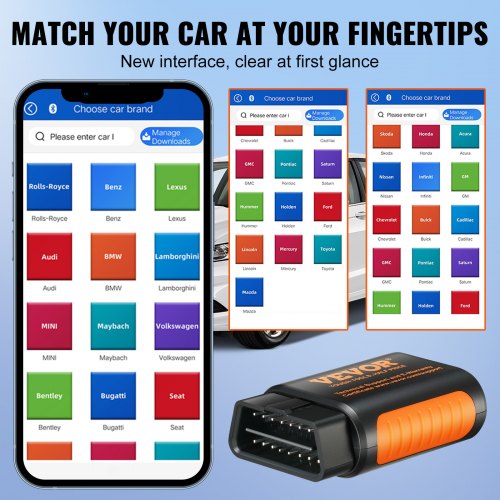
Credit: www.vevor.com
Connecting The Scanner To Your Car
Connecting your OBD2 scanner to your car is a straightforward process that opens up a world of information about your vehicle’s health. This connection allows you to retrieve diagnostic trouble codes, monitor real-time data, and even reset warning lights. Before you get started, make sure you understand the steps involved to avoid any frustration or confusion.
Locating The Obd2 Port
The OBD2 port is usually found under the dashboard, near the steering column. It’s a 16-pin connector that looks like a trapezoid. Sometimes, it might be hidden behind a small cover or panel, so take a careful look around your driver’s side footwell.
If you’ve ever struggled to find it, try checking your vehicle’s manual or searching online for your car’s make and model. Have you noticed how some cars hide it in odd spots? Knowing exactly where it is saves you time and hassle.
Preparing Your Vehicle
Before connecting the scanner, make sure your car’s engine is off and the key is out of the ignition. In some cases, the scanner needs the ignition turned to the “on” position without starting the engine to power up. Double-check your scanner’s instructions for specific power requirements.
Also, ensure your vehicle’s battery is charged. A low battery can affect the scanner’s ability to communicate properly. Have you ever tried diagnosing a car with a weak battery? It often leads to confusing or incomplete data.
Establishing The Connection
Plug the scanner’s connector firmly into the OBD2 port. You should feel it click or sit snugly without forcing it. Once connected, power on your scanner. Some models power on automatically when plugged in.
After powering on, the scanner will start communicating with your car’s computer. Watch for confirmation messages or indicator lights. If the scanner doesn’t respond, try unplugging and reconnecting or checking the connection points for dirt or debris.
Reading And Interpreting Codes
Reading and interpreting codes from an OBD2 scanner is essential for understanding your vehicle’s health. These codes provide clues about problems in the engine, transmission, and other systems. Learning to decode them helps in quick diagnosis and repair.
Accessing Diagnostic Trouble Codes
Connect the OBD2 scanner to the vehicle’s port, usually under the dashboard. Turn on the ignition without starting the engine. Follow the scanner’s prompts to scan for trouble codes. The device will display a series of letters and numbers. These are the Diagnostic Trouble Codes (DTCs) that point to specific issues.
Common Code Meanings
Codes usually start with a letter, followed by four digits. The letter shows the system:
- P– Powertrain (engine, transmission)
- B– Body (airbags, seats)
- C– Chassis (brakes, suspension)
- U– Network (communication between modules)
The digits provide detailed info. For example, P0301means a misfire in cylinder 1. P0420indicates a catalytic converter issue. Knowing these basics helps identify problems faster.
Using Code Lookup Resources
After reading codes, use lookup tools for detailed explanations. Many websites and apps offer free databases. Enter the code to get descriptions, possible causes, and fixes. Some scanners include built-in code definitions as well. This research guides you in deciding whether to seek professional help or try simple repairs.
Clearing Codes And Next Steps
After successfully reading the codes with your OBD2 scanner, the next important step is clearing those codes and deciding what to do next. Clearing codes can reset your check engine light, but it’s crucial to understand the implications before taking action. Let’s dive into how you can reset the light, when to get professional help, and how to maintain your vehicle after diagnosis.
Resetting The Check Engine Light
Once you’ve identified the trouble codes, you can clear them using your OBD2 scanner. Most scanners have a simple “Clear Codes” or “Erase Codes” button—pressing this will turn off the check engine light temporarily.
Keep in mind, clearing codes doesn’t fix the problem causing them. If the issue persists, the light will come back on after a short drive cycle. Think of clearing the codes as hitting a reset button; it’s useful after repairs or if you want to see if the problem was a one-time glitch.
When To Seek Professional Help
If the check engine light returns quickly or you notice changes in your vehicle’s performance, it’s time to consult a mechanic. Some codes indicate issues that require specialized tools or expertise.
Ignoring persistent codes can lead to bigger problems and higher repair costs. If you’re unsure about the meaning of a code or how to fix it, don’t hesitate to ask a professional. Your safety and vehicle’s health depend on it.
Maintaining Your Vehicle After Diagnosis
After clearing codes and addressing any issues, maintain your vehicle regularly to prevent future problems. This includes simple tasks like checking fluid levels, replacing air filters, and monitoring tire pressure.
Regular maintenance helps reduce error codes and keeps your car running smoothly. Have you ever noticed how a small fix can stop a warning light from coming back? That’s the power of proactive care.

Credit: www.amazon.com
Frequently Asked Questions
What Is An Obd2 Scanner Used For?
An OBD2 scanner reads your vehicle’s diagnostic codes. It helps identify engine problems and monitor car performance. It’s essential for DIY car maintenance and saves time and money at repair shops.
How Do I Connect An Obd2 Scanner To My Car?
Locate your car’s OBD2 port, usually under the dashboard. Plug the scanner into the port, turn on the ignition, and follow the scanner’s instructions to start reading codes.
Can I Use Any Obd2 Scanner On All Cars?
Most OBD2 scanners work on cars built after 1996 in the U. S. However, some vehicles may require specific scanners due to different protocols or features.
What Do Obd2 Error Codes Mean?
OBD2 codes are standardized and describe specific vehicle issues. Each code includes a letter and numbers indicating the problem area, like engine or transmission.
Conclusion
Reading an OBD2 scanner helps you understand your car’s health. It shows error codes clearly and quickly. You can find problems early and avoid big repairs. Using the scanner often saves time and money. Just plug it in, read the codes, and act fast.
This skill keeps your vehicle running smoothly and safely. Practice a little, and it will become easy. Stay informed and take control of your car’s care. Simple steps lead to better car maintenance every day.