
Have you ever wondered how to lift a car safely and effectively? Whether you need to change a tire, check underneath, or perform a quick repair, knowing the right way to lift your car can save you time and keep you safe.
You’ll discover simple steps and essential tips that anyone can follow. By the end, you’ll feel confident handling this task like a pro. Ready to learn how to lift a car the right way? Let’s dive in.
Credit: www.redlinestands.com
Preparing To Lift
Preparing to lift a car requires careful planning and safety checks. This step ensures the process goes smoothly without accidents or damage. Understanding the tools and checking the car’s stability are key parts of preparation. Take time to set up everything correctly before lifting.
Choosing The Right Tools
Select tools that match your car’s weight and size. A hydraulic floor jack is common for lifting cars easily. Use jack stands to hold the car securely once lifted. Avoid using makeshift tools that can fail. Check each tool for damage or wear before use. Having the correct tools increases safety and efficiency.
Checking The Car’s Stability
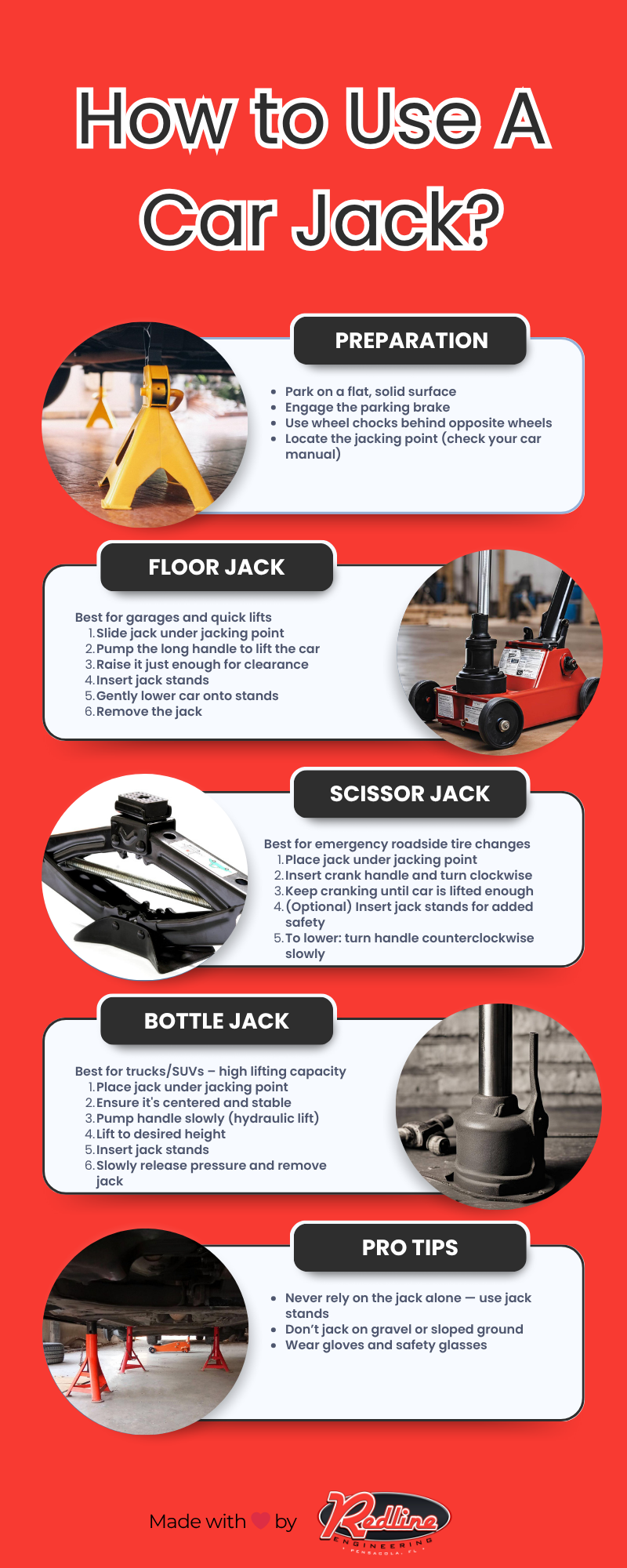
Park the car on a flat, solid surface. Avoid slopes or soft ground that can cause slipping. Engage the parking brake to prevent movement. Place wheel chocks on wheels that stay on the ground. Test the car’s stability by gently pushing it. If it moves or rocks, adjust the position and chocks. Stability is crucial to avoid accidents during lifting.
Using A Jack Safely
Lifting a car with a jack requires more than just muscle; it demands attention to detail and respect for safety. Using a jack safely means understanding exactly where and how to place it, and knowing how to operate it without risking injury or damage. Let’s break down the key actions that keep you safe and your car stable throughout the process.
Positioning The Jack
Placing the jack in the right spot is crucial. Most cars have designated jacking points—these are reinforced areas designed to handle the pressure. Look for marks or check your owner’s manual to find these spots.
A wrong position can slip or damage your car’s frame. Imagine lifting the car only to have it tilt unexpectedly. That’s a dangerous situation. Always make sure the jack is on a flat, solid surface before you start lifting.
- Use wheel chocks on the opposite wheels to prevent rolling.
- Never place the jack on soft ground like grass or gravel.
- Align the jack saddle directly under the jacking point for maximum stability.
Operating The Jack Properly
Slow and steady wins the race when operating a jack. Pump the handle smoothly rather than jerking it up quickly. This helps avoid sudden shifts that could unbalance the car.
Keep an eye on the car’s movement as you lift. If you notice any wobbling or slipping, stop immediately and readjust the jack. Your safety depends on maintaining control throughout.
Once the car is lifted, never rely on the jack alone to hold it up. Always use jack stands to support the vehicle before you work underneath. Have you ever thought about how easy it is to overlook this step? Skipping it can lead to serious accidents.
Securing The Vehicle
Securing the vehicle is the most important step before lifting it. A well-secured car prevents accidents and injuries. Take time to make sure the car stays stable throughout the process. Safety should never be rushed or ignored.
Using Jack Stands
Jack stands provide strong support after lifting the car. Always place them on a flat, solid surface. Position the stands under the car’s frame or designated lift points. Lower the car slowly onto the stands. Double-check that the stands hold the vehicle firmly before working underneath it.
Avoiding Common Mistakes
- Never rely on the jack alone to support the car.
- Do not lift the car on an uneven or soft surface.
- Ensure the parking brake is set and wheels are chocked.
- Check that jack stands are rated for your car’s weight.
- Do not rush the process; stay focused and cautious.

Credit: mohawklifts.com
Lifting Without A Jack
Lifting a car without a jack might seem tricky, but there are safe and effective ways to do it. Whether you forgot your jack or want to try something different, understanding alternative lifting methods can save you time and effort. Let’s look at how ramps and other tools can help you lift your car safely.
Using Ramps
Ramps are a simple and reliable way to lift your car without a jack. You just drive the car onto the ramps, which gently raise the front or rear end. This method provides a stable and wide base, reducing the risk of the car slipping or falling.
When choosing ramps, make sure they are rated for your car’s weight. Place them on a flat, solid surface like concrete or asphalt to keep them steady. You can also use wheel chocks behind the tires that remain on the ground for extra safety.
One time, I used ramps to change my car’s oil on a busy weekend. It was quick and safe, and I didn’t have to worry about the jack failing. Have you ever tried ramps for maintenance? They’re a great tool to keep in your garage.
Alternative Methods
If you don’t have ramps, look for sturdy objects around you that can help lift the car slightly, such as thick wooden blocks or bricks. Stack them carefully to create a stable platform to support the car’s weight.
Another option is using a lever system with a sturdy plank and a fulcrum, but this requires caution and some mechanical knowledge. Make sure the plank and fulcrum can handle the car’s weight without bending or slipping.
- Always secure the car with the parking brake.
- Place wheel chocks to prevent rolling.
- Never get under the car unless it feels completely stable.
Have you ever had to improvise to lift a car? Sharing your experience might help others think creatively in tough situations. Remember, safety should always come first, no matter the method you use.

Credit: www.youtube.com
Frequently Asked Questions
How Do You Safely Lift A Car By Yourself?
Use a quality hydraulic jack on a flat surface. Engage the parking brake and place wheel chocks. Lift at the manufacturer’s recommended jacking points. Never rely solely on the jack; use jack stands to secure the car before working underneath.
What Tools Are Needed To Lift A Car?
You need a hydraulic jack, jack stands, wheel chocks, and a lug wrench. These tools ensure safe lifting and stability. Avoid makeshift tools to prevent accidents. Always follow safety guidelines for using each tool properly.
Can You Lift A Car Without A Jack?
Lifting a car without a jack is unsafe and not recommended. Use alternatives like ramps or seek professional help. Improper lifting risks severe injury and car damage. Always use approved tools designed for vehicle lifting.
Where Is The Best Place To Lift A Car?
Lift the car at designated jacking points, usually near the wheels. Consult the vehicle’s manual for exact locations. Avoid lifting on weak or rusted areas to prevent damage. Proper placement ensures safe and stable lifting.
Conclusion
Lifting a car needs care and the right tools. Always check the ground is flat and solid. Use a strong jack and safety stands for support. Take your time and follow safety steps closely. Doing this keeps you safe and prevents damage.
Now, you know how to lift a car safely. Stay careful and confident when you work on vehicles.